


War on Terror Memorial
[ 2023 ]
"The Last Flight of Farah"
The day began like any other in a quiet neighborhood of Mosul.
Children ran into the street when they saw an American patrol passing through. They knew the soldiers sometimes carried candy, and for a few brief moments, the children were simply children—laughing, waiting, hoping.
Among them was a four-year-old girl named Farah.
Then everything changed.
A vehicle packed with explosives entered the sector. A suicide bomber drove directly into a cluster of U.S. Army Stryker vehicles and detonated the explosives.
Two enormous blasts tore through the neighborhood.
The quiet street became a landscape of fire, smoke, shattered concrete, and flying metal. In an instant, the ordinary world of children and soldiers was replaced by the terrible reality of war.
As the smoke began to clear, U.S. Army Major Mark Bieger ran toward the blast site.
He was not thinking about the danger. He was thinking about the wounded.
Among the wreckage, he found Farah.
The little girl had suffered catastrophic injuries from the explosion. Major Bieger wrapped her in a thick blanket, gathered her into his arms, and carried her toward a waiting Stryker.
He ordered his soldiers to evacuate her immediately.
Every second mattered.
And as he ran, Major Bieger kept talking to her.
He urged her to hold on. To keep her eyes open. To stay with them.
The soldiers did everything they could.
Farah was rushed aboard a medical evacuation helicopter and flown toward a military hospital. But her injuries were too severe.
Before the doctors could reach her, high above the streets of Iraq, Farah died peacefully in the arms of the soldiers who had tried to save her.
A war correspondent, Michael Yon, was with the unit that day.
He captured the moment in a photograph that would come to be known as "Little Girl."
The image is almost unbearable in its simplicity.
Children ran into the street when they saw an American patrol passing through. They knew the soldiers sometimes carried candy, and for a few brief moments, the children were simply children—laughing, waiting, hoping.
Among them was a four-year-old girl named Farah.
Then everything changed.
A vehicle packed with explosives entered the sector. A suicide bomber drove directly into a cluster of U.S. Army Stryker vehicles and detonated the explosives.
Two enormous blasts tore through the neighborhood.
The quiet street became a landscape of fire, smoke, shattered concrete, and flying metal. In an instant, the ordinary world of children and soldiers was replaced by the terrible reality of war.
As the smoke began to clear, U.S. Army Major Mark Bieger ran toward the blast site.
He was not thinking about the danger. He was thinking about the wounded.
Among the wreckage, he found Farah.
The little girl had suffered catastrophic injuries from the explosion. Major Bieger wrapped her in a thick blanket, gathered her into his arms, and carried her toward a waiting Stryker.
He ordered his soldiers to evacuate her immediately.
Every second mattered.
And as he ran, Major Bieger kept talking to her.
He urged her to hold on. To keep her eyes open. To stay with them.
The soldiers did everything they could.
Farah was rushed aboard a medical evacuation helicopter and flown toward a military hospital. But her injuries were too severe.
Before the doctors could reach her, high above the streets of Iraq, Farah died peacefully in the arms of the soldiers who had tried to save her.
A war correspondent, Michael Yon, was with the unit that day.
He captured the moment in a photograph that would come to be known as "Little Girl."
The image is almost unbearable in its simplicity.
The Memorial
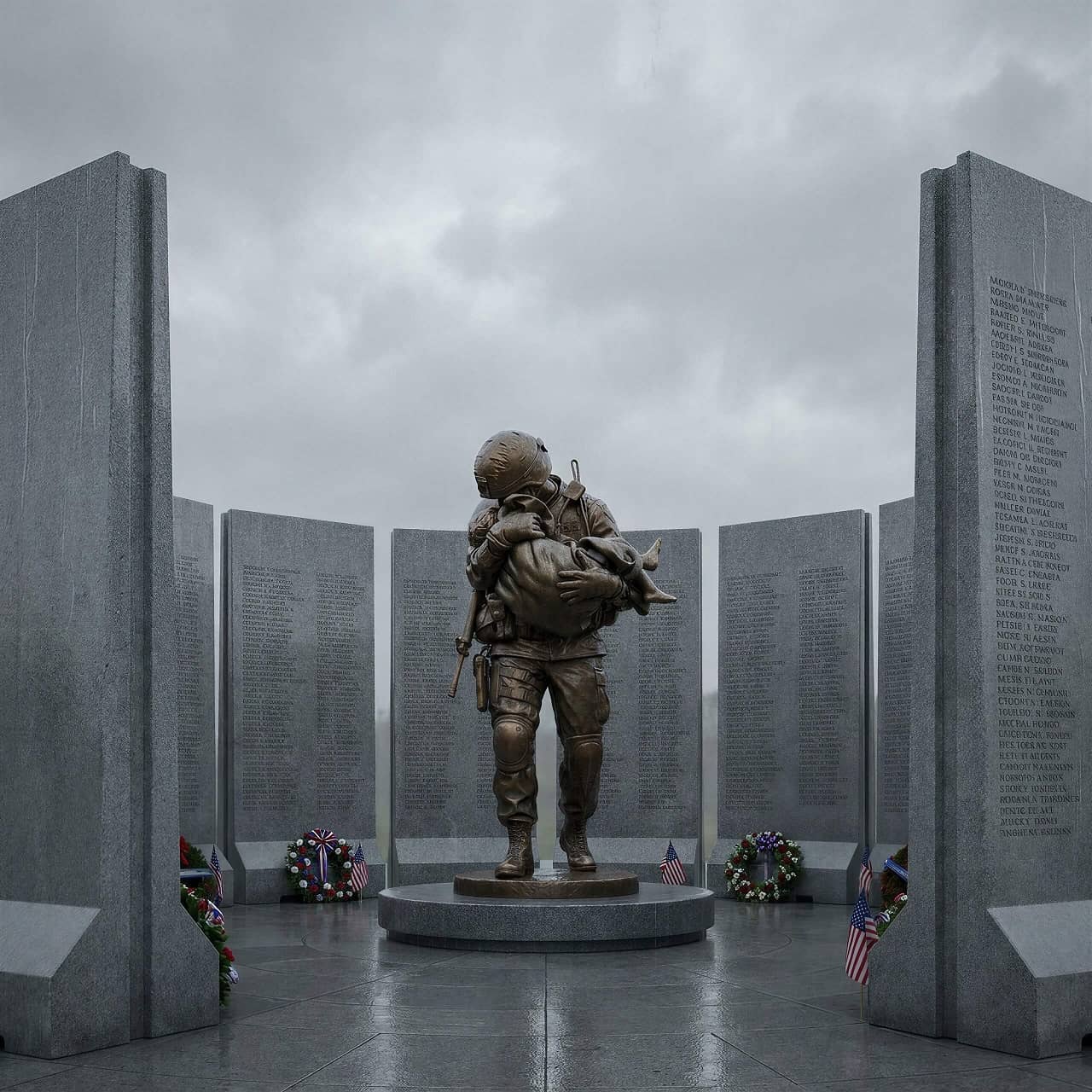
At its center is the image of Major Mark Bieger holding Farah in his arms—a moment that, to me, captures both the tragedy and the humanity of the wars fought after September 11.
The figures would stand within a circle formed by concrete T-walls, the massive barriers that became such a familiar presence in Iraq and Afghanistan and were used to protect people and installations from vehicle-borne suicide attacks. The walls bear the names of fallen soldiers. They stand in silent witness to the major and the injured child, creating a poignant contrast between duty, vulnerability, and loss.
Something that wars cannot destroy: our capacity to care for another human being.
The figures would stand within a circle formed by concrete T-walls, the massive barriers that became such a familiar presence in Iraq and Afghanistan and were used to protect people and installations from vehicle-borne suicide attacks. The walls bear the names of fallen soldiers. They stand in silent witness to the major and the injured child, creating a poignant contrast between duty, vulnerability, and loss.
Something that wars cannot destroy: our capacity to care for another human being.
A Memorial Waiting to Be Built
I started this project in 2023.
Since then, I have carried the concept with me, hoping to find a way to turn the design into something real—a physical place where people can gather, reflect, remember, pray and understand that behind every conflict are human lives. Children lives.
So far, I have not found the means to bring the memorial to life.
But the idea remains.
Farah was four years old.
She should have grown up.
She should have had a lifetime ahead of her.
Instead, she became one of countless innocent lives caught in a war they did not choose.
Her story must not be forgotten.
And perhaps, one day, this memorial can give that story a permanent home.
Not to celebrate war.
Not to glorify violence.
But to remember the people.
To honor the fallen.
Since then, I have carried the concept with me, hoping to find a way to turn the design into something real—a physical place where people can gather, reflect, remember, pray and understand that behind every conflict are human lives. Children lives.
So far, I have not found the means to bring the memorial to life.
But the idea remains.
Farah was four years old.
She should have grown up.
She should have had a lifetime ahead of her.
Instead, she became one of countless innocent lives caught in a war they did not choose.
Her story must not be forgotten.
And perhaps, one day, this memorial can give that story a permanent home.
Not to celebrate war.
Not to glorify violence.
But to remember the people.
To honor the fallen.
See other projects
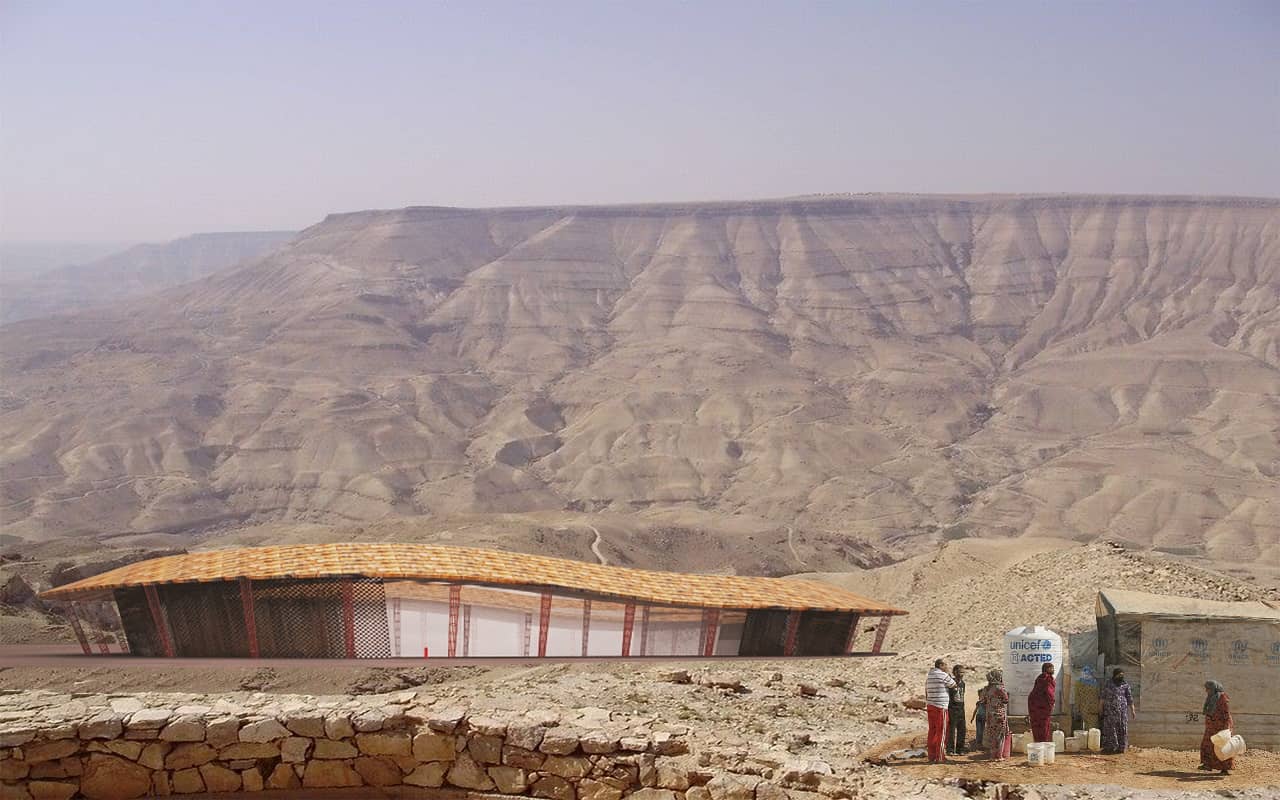
"Place and Displacement" competition, finalist, 2017
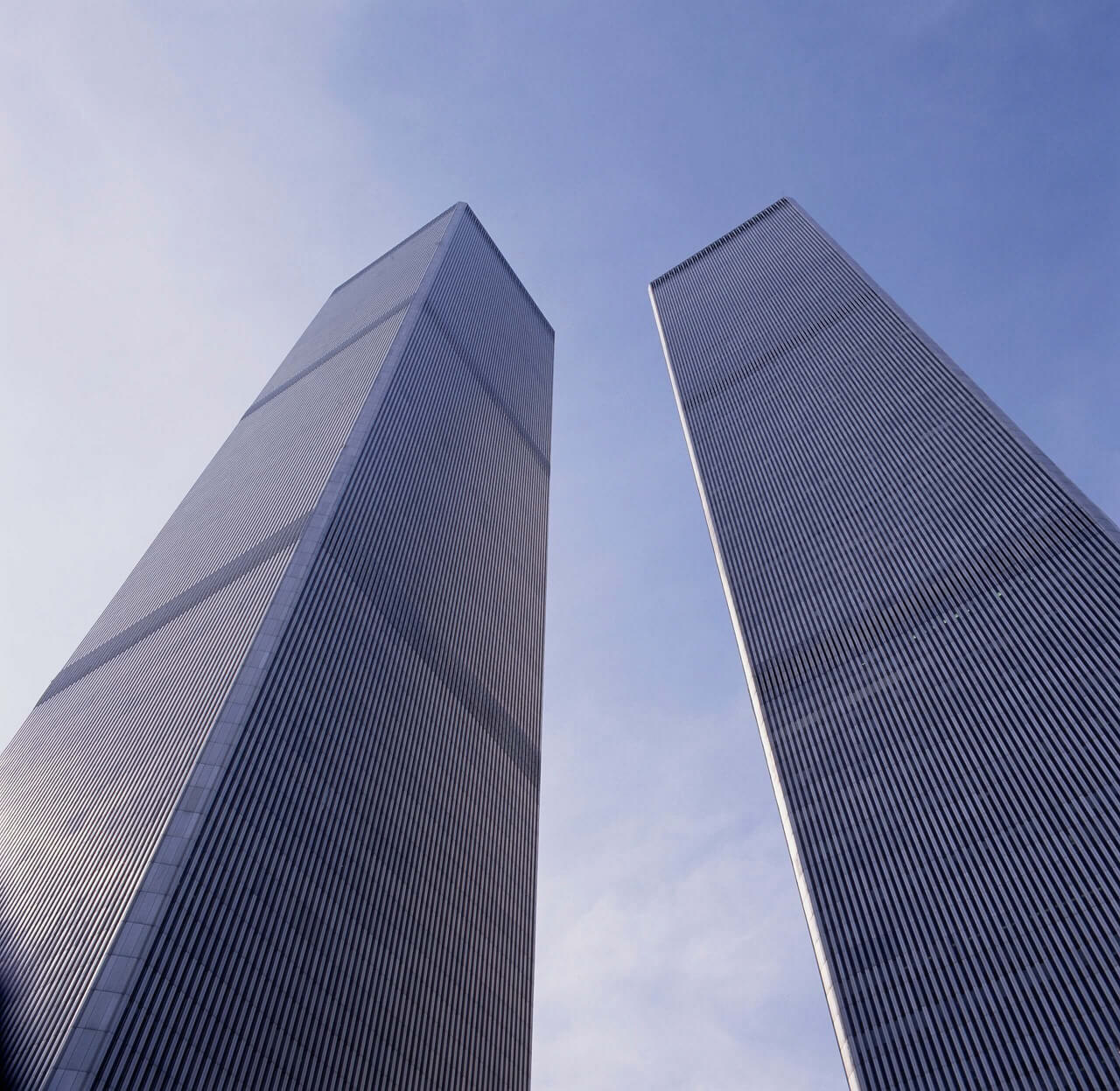
A project initiative dedicated to a largely unknown hero of 9/11, 2021