


Camp Hope
[ 2017 ]
First of all, I would like to express my gratitude to the organizers of this tender and to everyone who has shown concern for this cause. I do not say this lightly. In 1988, a devastating earthquake struck Armenia. Along with the Chernobyl disaster, it was one of the final "death throes" of the Soviet Union. Tens of thousands of refugees were forced to seek new homes. At that time, my family did everything possible to help—gathering warm clothes, food, and money. To my knowledge, those families managed to fully adapt; their children received higher education in Russia and continue to live here today.
Although I was only a child at the time, my memory of these events remains vivid. I still believe that while there are natural forces beyond our control, there are also challenges we can resolve ourselves—specifically, those rooted in politics. Mass migration is not a problem exclusive to the 21st century, yet in this century, it remains as dire as ever.
Although I was only a child at the time, my memory of these events remains vivid. I still believe that while there are natural forces beyond our control, there are also challenges we can resolve ourselves—specifically, those rooted in politics. Mass migration is not a problem exclusive to the 21st century, yet in this century, it remains as dire as ever.
Problem Statement: Vulnerability and Freedom
Humans are inherently social creatures. Our strength lies in the collective experience and knowledge acquired by society. An individual raised without access to this shared knowledge is deprived of their full human potential, a phenomenon often described as "Mowgli syndrome." Our resilience depends on knowing how to utilize both natural and human resources—mental and physical—for our life and development.
True strength is found in a well-organized society where every person can contribute according to their abilities and remain useful to those around them. When individuals are productive members of society, they gain respect and recognition. Conversely, when a person can only receive without the means to give back, they become dependent on the goodwill of others. This dependency creates vulnerability, leading to wasted potential. It is crucial that this untapped potential does not transform into a destructive force but is instead channeled into creative endeavors. Therefore, we must build more than just a marketplace for end products; we must create a space for their production and innovation.
True strength is found in a well-organized society where every person can contribute according to their abilities and remain useful to those around them. When individuals are productive members of society, they gain respect and recognition. Conversely, when a person can only receive without the means to give back, they become dependent on the goodwill of others. This dependency creates vulnerability, leading to wasted potential. It is crucial that this untapped potential does not transform into a destructive force but is instead channeled into creative endeavors. Therefore, we must build more than just a marketplace for end products; we must create a space for their production and innovation.
Key Factors: "Give a man a fish, and you feed him for a day…"
"...Teach a man to fish, and you feed him for a lifetime."
- Identifying Vulnerability: What are the root causes of vulnerability, and why are current solutions failing?
- Market Inefficiency: Why is the existing "inside-the-camp" market inefficient? We must analyze why a purely functional market fails to prepare inhabitants for a transition to the outside world, often leaving them vulnerable and unadjusted.
- Future Transitions: We are exploring potential destinations for refugees post-camp and identifying viable occupations for their life in the outside world.
- Skill Acquisition: Identifying the specific skills necessary for survival and financial independence beyond the camp's borders.
- Volunteer Engagement: Attracting volunteers to assist refugees in language acquisition and in understanding the cultural and ethical norms of neighboring states and the global community.
Current Infrastructure and Economic Challenges
According to public data, the refugee camp already possesses essential infrastructure, including shops, cafes, recreational centers, schools, and churches. Although trade is present, it is not sufficient to establish the camp as a self-sustaining system; maintaining the site currently costs over $ 500,000 per day. Since the inhabitants have no purchasing power, economic efforts must be redirected outward, using the proximity of developed markets like Israel as a strategic launching pad.
The E-commerce Strategy
In the modern technological landscape, e-commerce has proven to be the most cost-effective model, eliminating the overhead of physical retail in high-cost areas. To facilitate this, only a centralized warehouse is required. Given that land prices in Jordan are significantly lower than in more economically developed neighboring regions, it is strategically advantageous to store goods in Jordan prior to international shipping.
While platforms like AliExpress, eBay, and Amazon offer a vast range of products, our proposed platform introduces a unique philanthropic dimension. By purchasing furniture or traditional folk art, customers are not just buying a product; they are directly supporting individuals in desperate circumstances.
While platforms like AliExpress, eBay, and Amazon offer a vast range of products, our proposed platform introduces a unique philanthropic dimension. By purchasing furniture or traditional folk art, customers are not just buying a product; they are directly supporting individuals in desperate circumstances.
Empowerment through Skills and Frameworks
Refugees, often lacking initial capital and raw materials, can primarily offer their experience and skills. However, many lack even basic necessities like food, water, and stable shelter. To address this, we must provide a multifunctional framework that allows them to apply their talents even without the means to start a private business.
A key priority is developing skills that facilitate a successful transition out of the camp. We suggest integrating work with education:
A key priority is developing skills that facilitate a successful transition out of the camp. We suggest integrating work with education:
- Language Immersion: Forming groups of 30–50 refugees led by a volunteer language instructor.
- Contextual Learning: Teachers will work alongside refugees, teaching technical terms and professional vocabulary relevant to their specific tasks (e.g., cleaning, sales, or crafts) in real-time.
The Marketplace as a Cultural and Industrial Hub
This marketplace will serve as an international platform to preserve and promote unique cultural heritage, including woodwork, traditional jewelry, carpet-weaving, and national arts. The labor force will be organized into functional groups:
For the most vulnerable groups, the marketplace will function as both a production workshop and a storage facility. This shift from simple internal reselling to external production is essential for achieving true self-sustainability.
- Sourcing: Extraction and gathering of raw materials.
- Logistics: Transportation and sorting.
- Production: Preliminary and final processing.
- Sales: Global distribution via the internet.
For the most vulnerable groups, the marketplace will function as both a production workshop and a storage facility. This shift from simple internal reselling to external production is essential for achieving true self-sustainability.
Economic and Social Integration
It is clear that a single project cannot solve the migration crisis alone; there must be several. However, this pioneering project allows us to streamline business processes that can be replicated elsewhere. By facilitating entry into the international market, this scheme will help transition local businesses from a "shadow economy" into a formal one—a move that is in the strategic interest of local administrations and governments.
This platform addresses two core challenges: self-sustainability and the social adaptation of refugees. By selling to solvent international buyers, the camp can generate the profit necessary to offset the costs of food and water, currently covered by external donors. Furthermore, involving volunteers in the daily workflow allows refugees to acquire language skills and understand the cultural norms of developed nations, preparing them for future employment in service or other essential sectors.
This platform addresses two core challenges: self-sustainability and the social adaptation of refugees. By selling to solvent international buyers, the camp can generate the profit necessary to offset the costs of food and water, currently covered by external donors. Furthermore, involving volunteers in the daily workflow allows refugees to acquire language skills and understand the cultural norms of developed nations, preparing them for future employment in service or other essential sectors.
Architectural Concept: Construction and Design
In a resource-constrained environment, it is vital to maximize the use of local materials such as wood, brick, and clay. However, to align the worldview of the camp population with global standards, the architecture must also reflect modern design principles.
- Vocational Training through Construction: By involving inhabitants in the building process, we provide immediate employment and hands-on vocational training. While the project must be led by professionals, the participation of locals is essential. Without it, they lose the opportunity to learn practical skills in the high-demand construction industry.
- Skill Development: During construction, workers will learn material names (facilitating roles as logistics personnel), color theory (for painting), and site management.
- Structural Design: We propose a wooden framework for the bearing columns, roof trusses, and wall outlines. Wall infills will consist of wire mesh or woven branches (similar to rattan furniture), providing protection from sun, wind, and dust while ensuring natural ventilation. The roof can be finished with sheet metal or traditional thatch.
- Symbolism of Form: The architecture reflects equality and openness. We suggest a modified circular form that symbolizes the production cycle. As a product moves along this circular route, it gradually reaches its final form. This layout encourages transparency and mutual learning among the inhabitants.
Technology and Functional Zoning
The total roofed area of the marketplace is approximately 9,500 m². Based on an allocation of 1.2 m² per person, the market can accommodate 8,000 visitors—roughly 10% of the camp's total population.
- Scalability: If the population grows, the 5,000 m² central courtyard can be utilized for mobile stands, kiosks, and temporary sheds.
- Adaptability: The structure is designed for versatility. Should the economic or political situation shift, the building can be converted into a school, hospital, or residential space by integrating necessary utilities.
- Environmental Legacy: A key feature is the project's sustainability. If the camp is eventually relocated, the building will not leave a permanent scar on the environment, as it is constructed primarily from natural materials such as wood and straw.
See other projects
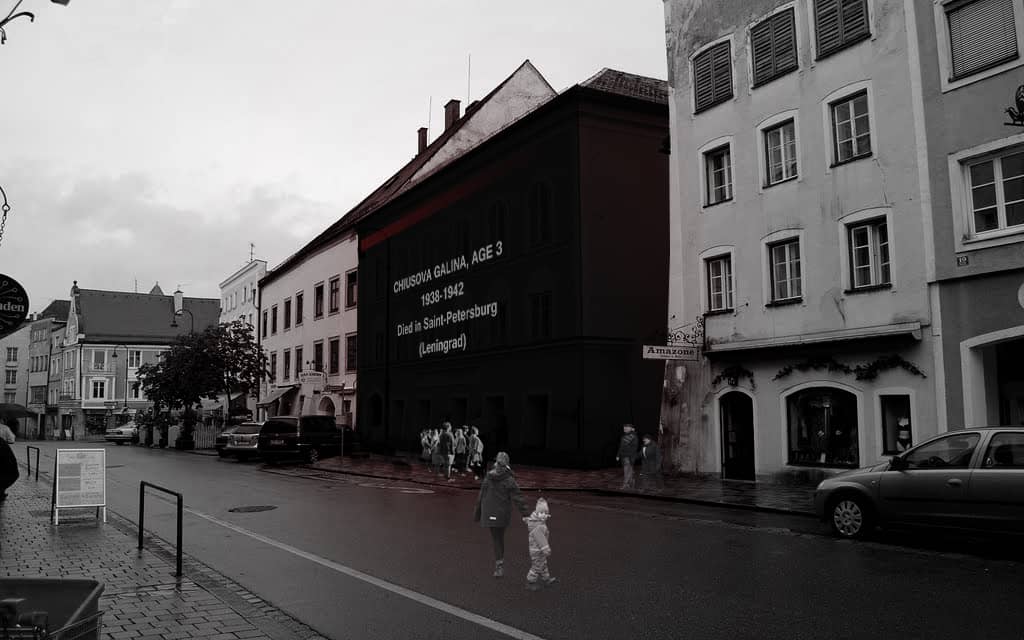
Shelter Fund, 2017
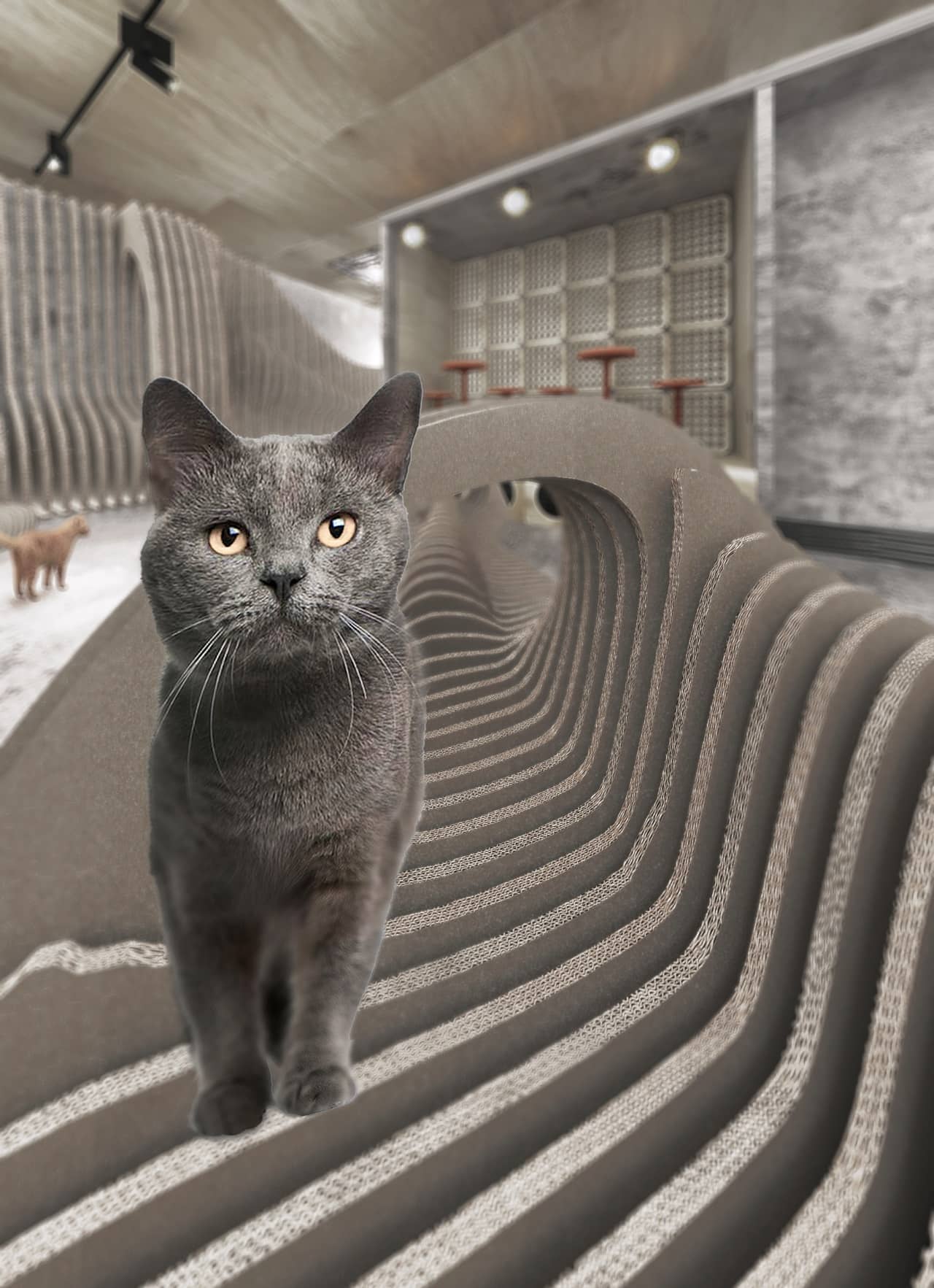
My ongoing initiative to support animal shelters. AIA Film Challenge, 2020